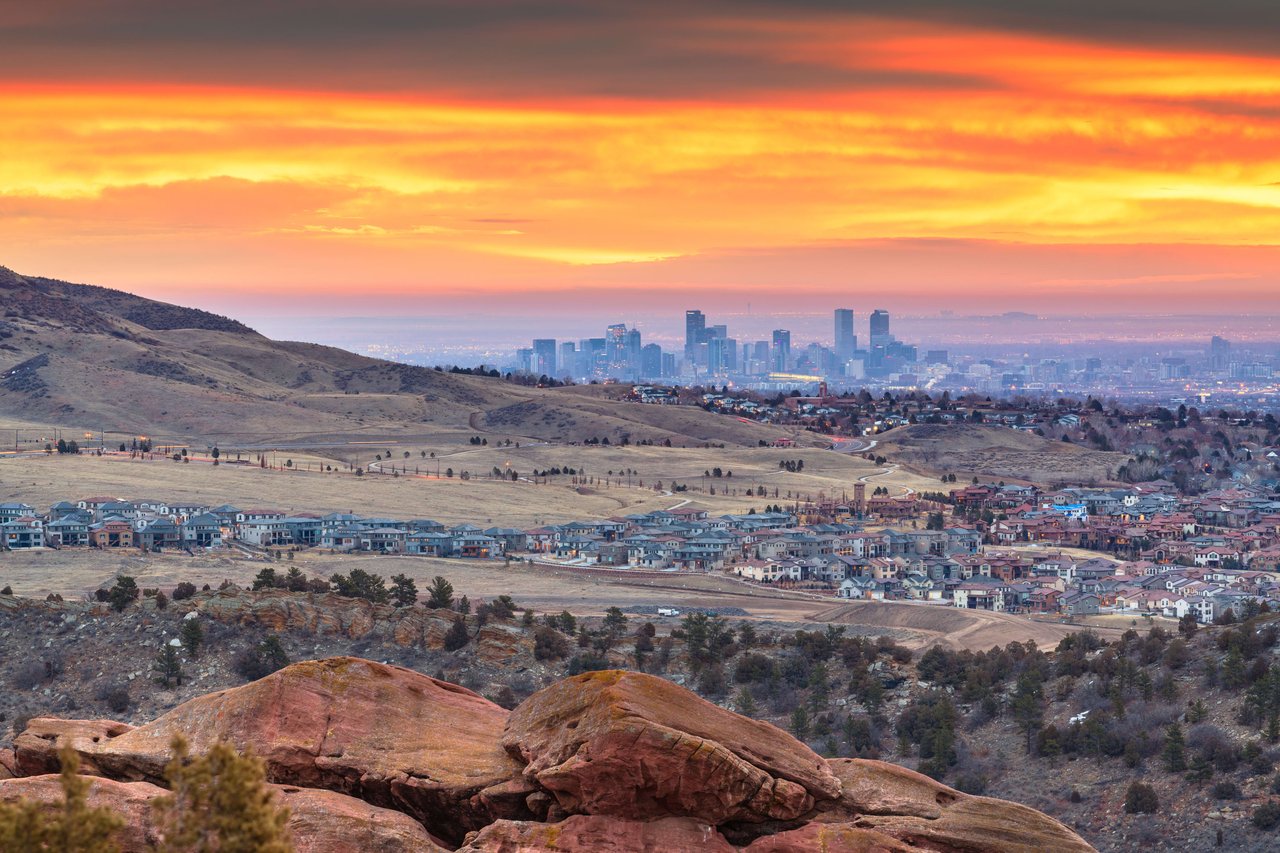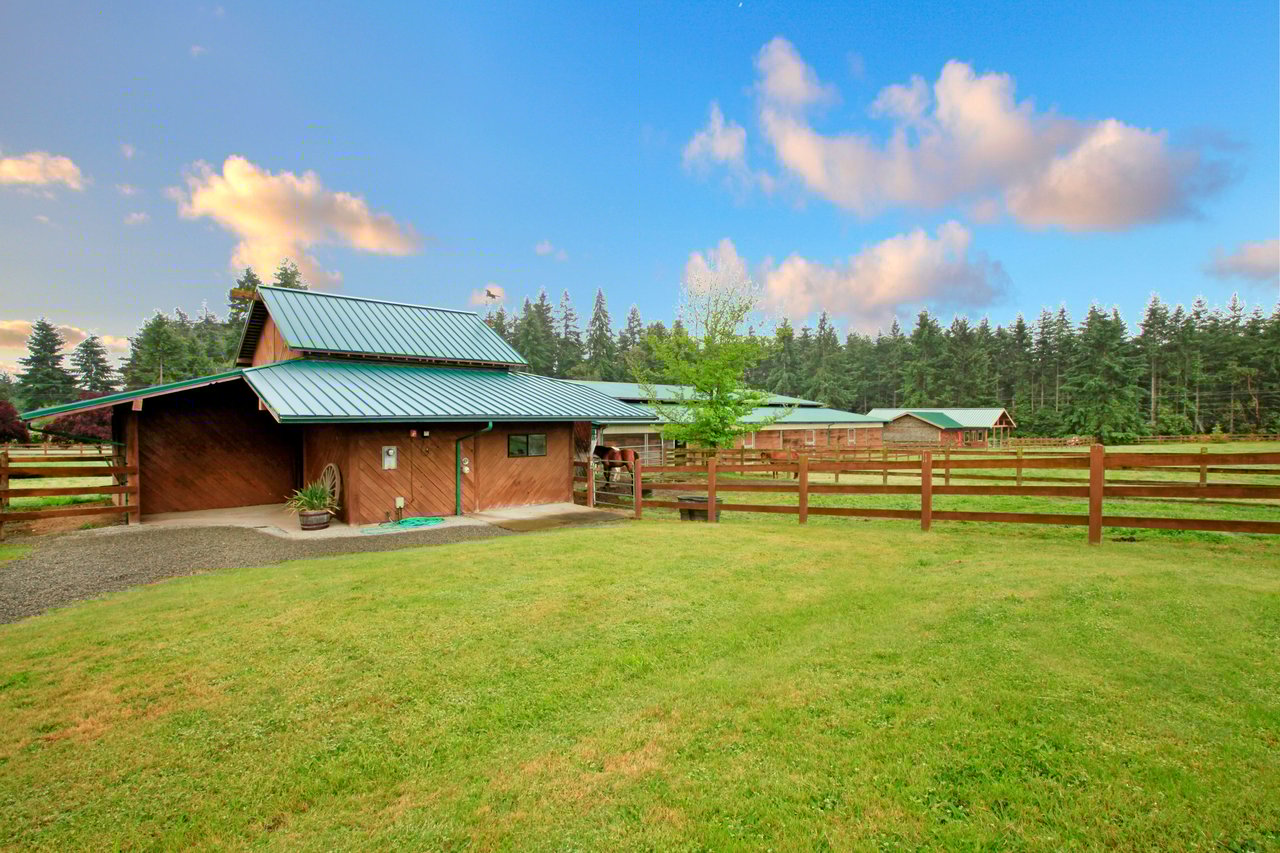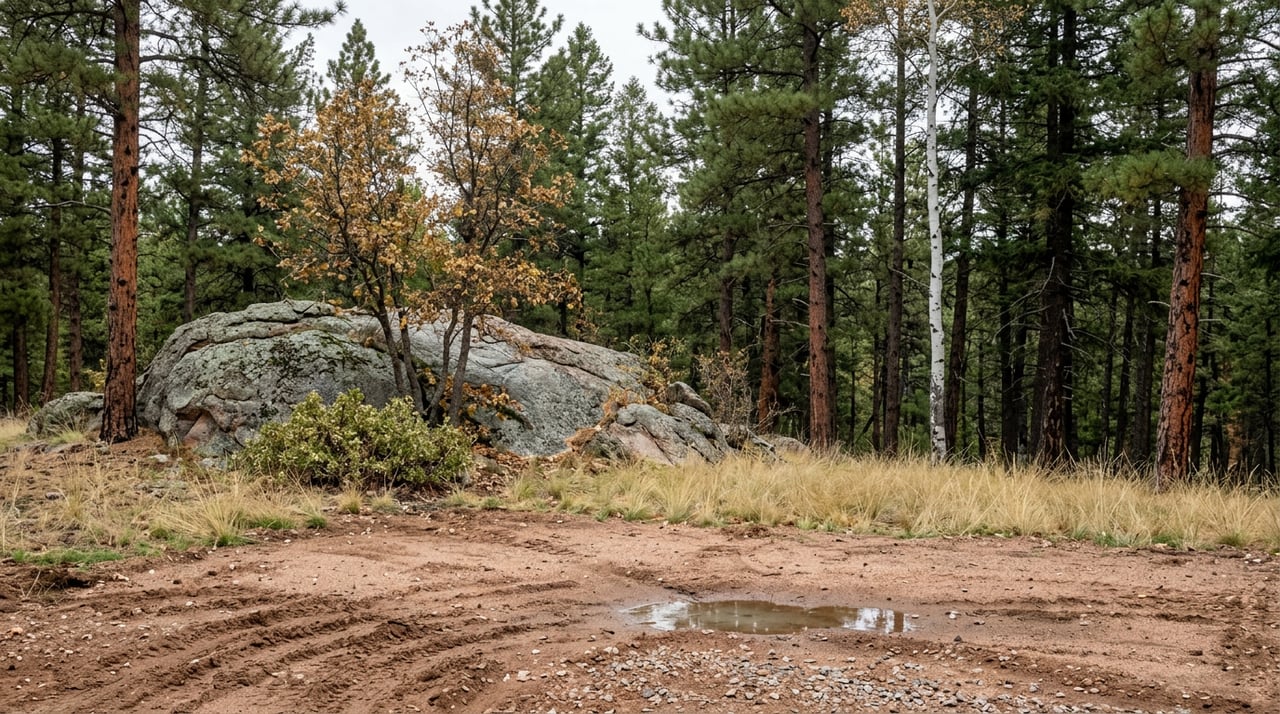
Two buyers spend the same afternoon look at foothills acreage. One is eyeing a parcel in Evergreen. The other has bookmarked something similar-looking in Conifer, fifteen minutes down Highway 285. Both parcels are wooded, both back to open space, both promise the same view of the Front Range at sunset. The Evergreen listing runs about 45 percent more per acre. It is tempting to read that gap as a verdict on which town is nicer. It isn't. The real driver is buried in paperwork neither buyer has opened yet: whether the land already has a settled answer for where its water comes from.
As of mid-August 2026, raw land in Evergreen is averaging just over $80,000 an acre. A few miles away, Conifer's current inventory is pricing closer to $55,593 an acre, based on listings tracked through early July. Same corridor, same county in most cases, same mountain aesthetic. The spread isn't a mystery once you look at what's actually being sold in each town, and it has almost nothing to do with school boundaries or bragging rights.
One Town, Two Completely Different Products
Morrison makes the point better than any cross-town comparison could, because you don't even need to leave the zip code. A 2.02-acre parcel on Federation Drive listed this month at $205,000, which works out to $101,485 an acre. Half a mile away, a 1.5-acre platted lot on South Homesteader Drive is priced at $495,700, or roughly $330,000 an acre. Meanwhile, a 48.3-acre parcel on Bobsled Trail that wraps the actual summit of Doublehead Mountain is listed at $1,225,000, or about $25,000 an acre.
Same town. Same market. A thirteen-fold difference in price per acre depending on which parcel you point to.
If you're pricing foothills land by dividing the sale price by the acreage, you're not comparing land. You're comparing three different products that happen to be measured in the same unit.
The Water Problem Is the Actual Price Tag
Here's what separates the small platted lots from the raw acreage, and what quietly drives the Evergreen-versus-Conifer gap too: whether someone already solved the water question for you.
Colorado is the strictest prior appropriation state in the country. Every well requires a state permit under Colorado Revised Statute 37-90-137, and not every parcel qualifies for the same kind of permit. A well serving a single home on 35 or more acres, or on a parcel outside a platted subdivision, typically qualifies for an exempt household-use permit. That's a simple filing, a modest fee, and approval in a matter of weeks through the Colorado Division of Water Resources.
A well inside a platted subdivision is a different matter entirely. If the parcel sits within one of the Denver Basin's non-tributary aquifers, the Dawson, Denver, Arapahoe, or Laramie-Fox Hills, the well is usually non-exempt, which means it needs a court-approved augmentation plan before the state will issue a permit at all. That plan has to demonstrate the well won't diminish water available to senior rights holders downstream, and the cost of maintaining it typically shows up as a per-share water assessment folded into HOA dues, running somewhere between $200 and $1,500 a year for as long as you own the home.
That is the quiet difference between the Doublehead Mountain summit lot and the small subdivision parcel down the street. The 48-acre mountain lot likely qualifies for a straightforward exempt permit. The platted lot almost certainly does not, but it also probably already has that augmentation plan in place, negotiated and paid for decades ago by whoever developed the subdivision. You're not just buying dirt when you buy the smaller lot. You're buying a water problem that someone else already solved for you, and the price reflects it.
The acre you're comparing isn't the same acre until you know whether the parcel comes with its own pending water court case.
Look at what's actually for sale in Evergreen right now and this pattern holds. Listings cluster around established, platted communities: Cragmont, Cragmont North, Bell Park Estates, the gated homesites at The Reserve at Cub Creek Ranch. These are subdivisions where roads, utilities, and often water infrastructure were built out years ago. Conifer's current inventory leans the other direction, toward larger raw holdings like a 273-acre parcel called Gooseberry Gulch Ranch and a 106-acre property known as Conley Ranch, both marketed as unimproved mountain acreage along the 285 corridor. Smaller, finished, water-solved lots command a premium per acre. Larger, raw, water-unsolved acreage trades at a discount because the buyer inherits the job.
Soil Adds Its Own Layer
Water rights aren't the only hidden cost. Once you have permission to drill, the ground itself decides what the well and septic system actually cost. Front Range foothills geology runs heavy to granite and gneiss, and drilling through hard rock slows progress and drives per-foot rates toward the high end of the range, with a complete residential well system in Colorado commonly landing between $10,000 and $30,000 depending on depth and geology.
Septic tells a similar story, and the county-by-county spread in Colorado shows how much terrain alone can move the number. Contractors working across the state have quoted mountain-heavy Park County in the $18,000 to $40,000 range for a full installation, against $12,000 to $25,000 in the flatter terrain of El Paso County. That same soil-and-slope logic plays out at a smaller scale across the Evergreen, Conifer, and Morrison corridor, where a gently sloped meadow lot and a granite outcropping half a mile away can require entirely different engineered systems.
Jefferson County has taken this seriously enough to study it directly. Between 1997 and 2001, the county partnered with the U.S. Geological Survey on a four-year assessment of groundwater in the Turkey Creek Watershed, the drainage that runs through much of this same foothills area, specifically to give planners a scientific basis for land use decisions in the mountains. That's not a generic caution about rural living. It's a documented acknowledgment that the ground under this exact corridor behaves unpredictably enough to warrant its own federal-county research project. The county's water resources page still points buyers to the resulting homeowner guide on mountain groundwater.
There's a county-line wrinkle too. Some land marketed under the Evergreen name, including parcels in Saddleback Ridge Estates, actually sits across the boundary in Clear Creek County rather than Jefferson County. That matters more than it sounds like it should, because permitting authority, road maintenance responsibility, and septic review can all shift with the county line, even when the listing photos and the drive time to downtown Evergreen look identical.
What to Check Before You Compare Two Listings
Before you let a price-per-acre number tell you anything about whether one foothills parcel is a better deal than another, get answers to these:
- Has a well permit already been issued for this specific parcel, and is it an exempt household-use permit or a non-exempt permit requiring an augmentation plan?
- If it's non-exempt, what is the annual augmentation fee, and is it already built into HOA dues or will you be negotiating it fresh?
- Has a percolation test been run on this soil, and does the seller have documentation of what kind of septic system the site can support?
- Is road access governed by a recorded HOA agreement, an informal maintenance arrangement among neighbors, or nothing at all?
- Which county actually has jurisdiction, and does that match the county everyone has been assuming based on the town name in the listing?
None of these questions show up in a price-per-acre calculation. All of them can move a project budget by tens of thousands of dollars.
The Real Comparison
Evergreen's higher average isn't a premium for prestige. It's largely a reflection of a market stocked with smaller, already-serviced homesites in established subdivisions where the water question was answered years ago. Conifer's lower average reflects a market still carrying more raw, unimproved acreage where that question is still open, and the buyer is the one who gets to answer it. Morrison, straddling both patterns within a few miles, makes the case impossible to ignore.
If you're comparing foothills land across these towns, the number worth asking about isn't the price per acre. It's what's already been solved and what you'd be solving yourself.
Land and acreage in the Colorado foothills rewards buyers who ask the right questions before they fall in love with a view. Courtney Nelson has spent two decades working exactly this corridor, from platted Evergreen subdivisions to raw Conifer and Morrison acreage, and knows which questions to ask before you write an offer. Reach out for a conversation about what a specific parcel actually costs to build on, not just what it costs to buy.